MSIX matters because it separates app identity and app state from traditional installer sprawl.
MSIX is not important just because it is newer than MSI or App-V. It matters because it gives Windows applications a cleaner contract with the operating system.
That is the real architectural value.
Start with package identity
At the center of MSIX is package identity. Once an application is packaged, Windows can identify it consistently by name, publisher, and version. That enables reliable installation, update behavior, clean removal, and access to platform capabilities that depend on package identity.
This is a significant improvement over the traditional sprawl of installer-driven state where files, registry keys, shell changes, and dependencies can be written all over the machine.
What the container model actually does
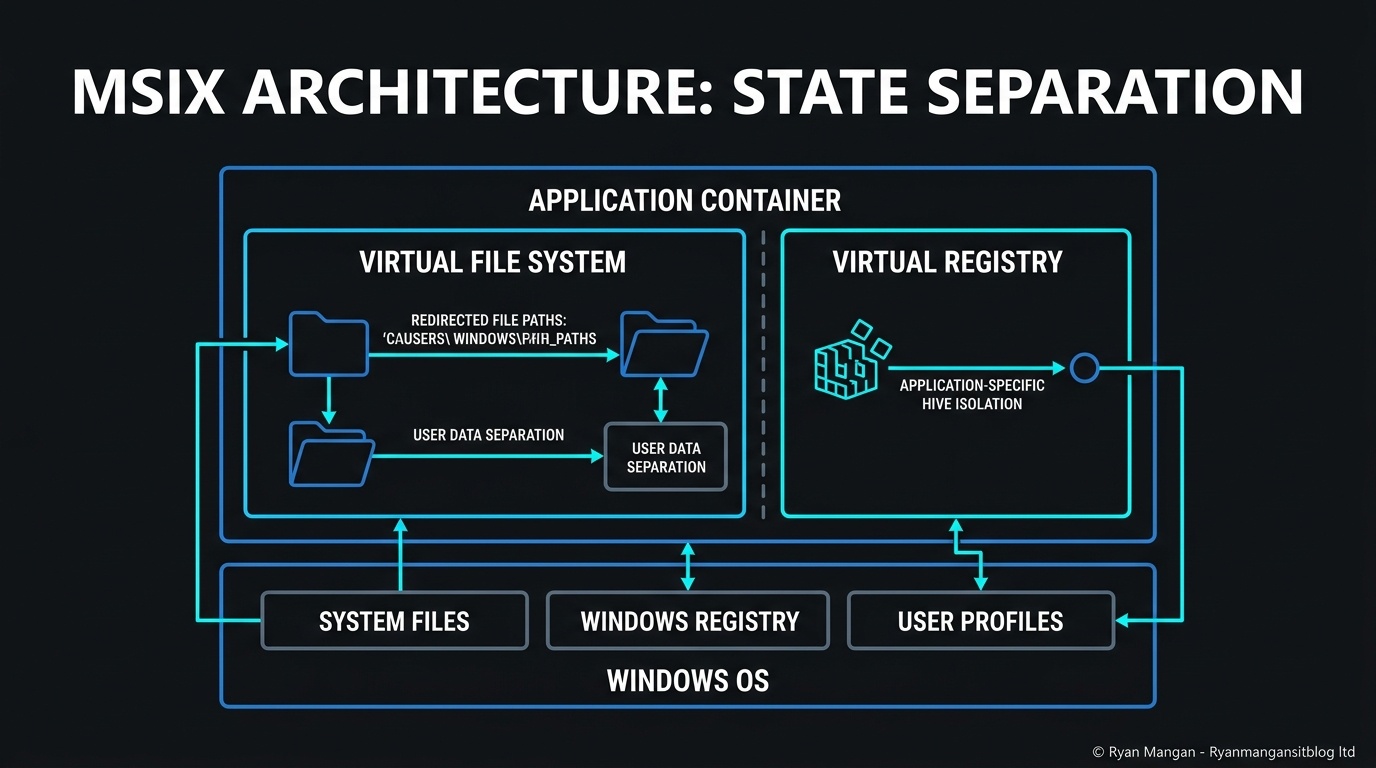
MSIX uses a lightweight containerization model. That does not mean every packaged app runs inside a separate virtual machine or a perfect sandbox. It means Windows controls how the package is installed and how certain file system and registry operations are virtualized at runtime.
In practice, that gives you a few major benefits:
- App binaries are treated as read-only package content.
- App state is separated from app installation files.
- Uninstall is cleaner and more predictable.
- Updates are more reliable because they replace package content atomically.
This is why MSIX tends to feel operationally cleaner than older installer models.
Isolation is real, but not absolute
One source of confusion is that "containerized" often gets interpreted as "fully isolated." That is not always true.
Microsoft documents two trust models:
- Full trust packaged desktop apps.
- AppContainer apps with stricter isolation.
Most converted Win32 applications are full trust packaged apps. They benefit from package identity and parts of the containerization model, but they are not equivalent to highly restricted AppContainer applications.
That distinction matters when people oversell MSIX as a universal security boundary.
Why enterprise teams should care
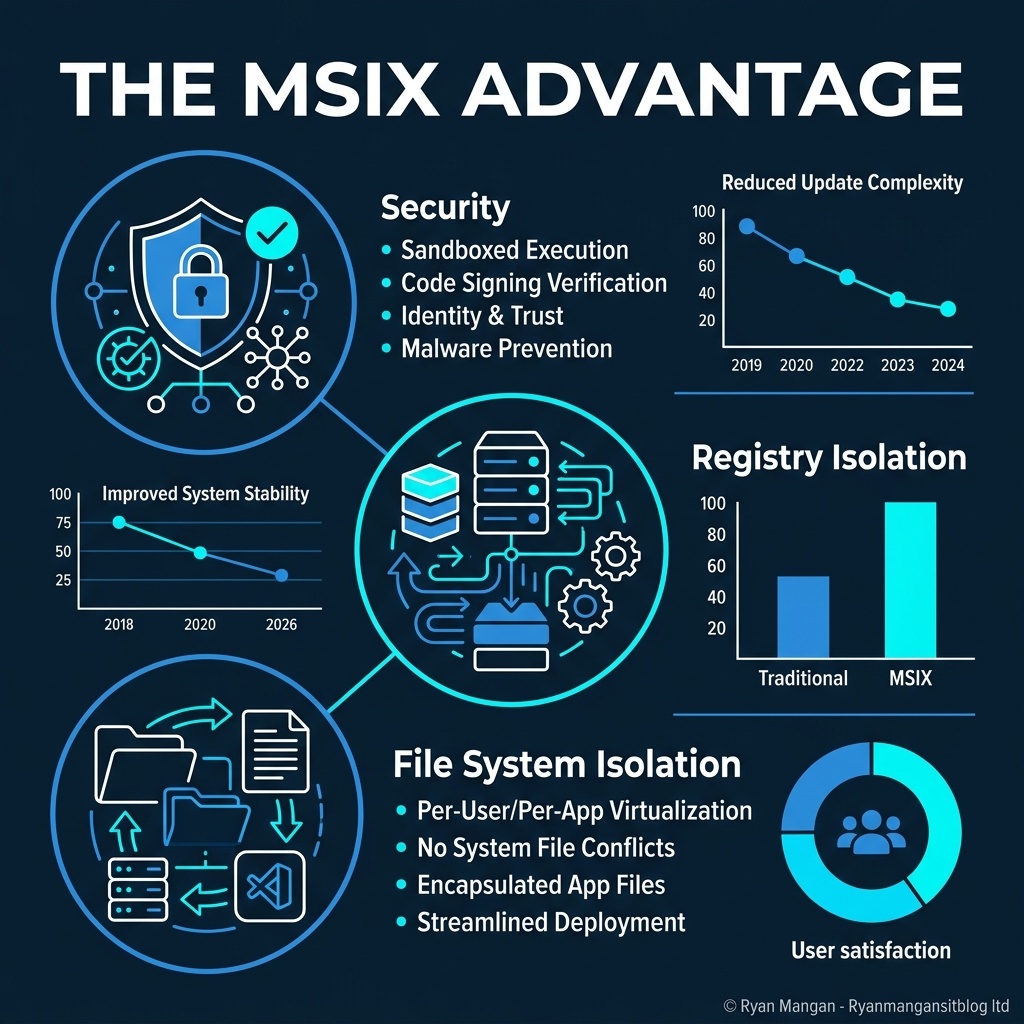
For enterprise application management, MSIX is attractive because it reduces platform mess:
- Cleaner uninstall behavior.
- Better state separation.
- Easier packaging consistency.
- Better fit for modern deployment tools.
That is especially useful in environments trying to reduce image complexity, modernize app delivery, and cut down on the operational drag of traditional Win32 installer behavior.
The pragmatic view
MSIX is not the answer for every application. Some apps still need remediation work, and some are better left in other deployment models. But when an application fits, MSIX improves the integrity of the desktop platform by making installation and runtime behavior more predictable.
That is why the architectural case is stronger than the marketing case. The value is not novelty. The value is control.
Bottom line
MSIX gives enterprise teams a more disciplined packaging model by combining package identity, cleaner state management, and more reliable install and uninstall behavior. That makes it a strong foundation for modern Windows application delivery, provided you stay realistic about compatibility and trust boundaries.